Why Organizations Need Flexible, Multi-Layer Data Models

Digital adoption has accelerated quickly in recent years. New systems have been deployed, data sources have multiplied, and teams now rely heavily on digital processes. Yet despite this progress, many organizations still struggle with data quality, consistency, and trust. Gartner notes that more than 72% of enterprises face challenges with the reliability of their data, not because they lack information, but because their underlying architecture wasn’t built for the speed, scale, and complexity of today’s environment.
Traditional data models were designed for simpler times when data moved slowly, systems were fewer, and reporting expectations were basic. As companies expand across platforms, markets, and channels, old architectures strain under the weight of real-time analytics, unified reporting, and AI-driven workloads. This is where flexible, multi-layer data models have emerged as the foundation for modern enterprise data transformation and long-term scalability.
Enterprise data environments are evolving rapidly, and three major trends are exposing the limitations of legacy architectures.
Rising Data Volume and Complexity
IDC forecasts that global data creation will surpass 221 zettabytes by 2026. Storing that data is no longer the issue the real challenge lies in managing, governing, and preparing it for analytics, real-time reporting, and AI-driven use cases. Legacy systems struggle to maintain structure, lineage, and consistency at this scale.
Growing Fragmentation Across Systems
Most organizations rely on a mix of CRM platforms, ERP systems, operational tools, industry applications, marketing platforms, and spreadsheets. Each generates its own structure, definitions, and business logic. This fragmentation leads to conflicting KPIs, mismatched dashboards, duplicated effort, slower reporting cycles, and limited trust in analytics.
The Shift Toward Real-Time and AI-Driven Workflows
Operational teams need insights in the moment, not after weekly or monthly reports. AI and machine learning require clean, well-modeled, high-quality data, which traditional architectures were not built to provide. Data architecture must evolve to support real-time analytics, strong governance, and AI-ready pipelines.
To meet modern business needs, organizations are adopting the multi-layer data model — a layered, modular, scalable architecture that improves reliability, consistency, and performance. These three reasons capture why it is becoming the standard for enterprise data modernization.
1. It Brings Order to Complexity and Creates a Reliable Data Foundation
As organizations grow, their data landscape becomes more fragmented with multiple systems, formats, pipelines, and business rules. A multi-layer model introduces the structure where it is needed most.
The Raw layer preserves source data for traceability and lineage. The Curated layer standardizes, validates, and cleans data. The Semantic layer delivers business-ready, KPI-aligned insights that everyone can rely on.
This layered approach reduces chaos, improves data quality, and creates a predictable foundation that scales with future use cases including real-time analytics and AI.
2. It Ensures Consistent, Trusted KPIs Across the Enterprise
KPI inconsistency is one of the biggest blockers to becoming a data-driven organization. Different teams define revenue, cost, margin, or customer metrics differently, creating misalignment and confusion.
A multi-layer architecture centralizes business logic in the semantic layer, creating a unified source of truth for all KPIs. This ensures consistent definitions, aligned reporting, improved data trust, and faster decision-making across the organization.
3. It Prepares the Organization for Real-Time Analytics and AI
Modern businesses need fast, accurate, and actionable insights. Real-time dashboards, automated alerts, and AI-driven workflows rely on clean, consistent, and well-modeled data.
A multi-layer architecture supports this by providing low-latency processing pipelines, high-quality curated datasets, and structured semantic models. Instead of retrofitting AI onto messy data ecosystems, the entire platform becomes AI-ready by design.
A flexible, multi-layer data model is no longer a technical upgrade — it is the architectural backbone of a modern, insight-driven enterprise. It brings structure to complex environments, restores consistency where fragmentation once existed, and creates a stable foundation for real-time analytics, data governance, and AI. For organizations looking to modernize, scale, and unlock the full value of their data, this approach offers a clear and practical path. Those who invest in strong data foundations today will be the ones who adapt faster, innovate sooner, and lead with greater clarity tomorrow.
Hexalytics is a modern data engineering and analytics consultancy with over a decade of experience helping organizations build scalable, trusted, and AI-ready data ecosystems. We simplify complex data environments through architecture-led design, multi-layer data modeling, lakehouse frameworks, and unified semantic layers that support consistent KPIs and real-time insights. Our vendor-neutral approach and end-to-end capabilities across strategy, engineering, governance, and analytics enable organizations to modernize their data platforms, improve decision-making, and turn information into a driver of growth.
If your teams struggle with inconsistent KPIs, slow reporting cycles, repeated data cleanup, or conflicting dashboards, a multi-layer model can significantly improve clarity and performance.
Yes. It is designed to be layered on top of your current landscape and adopted gradually without disrupting operations.
No. Mid-market and growing organizations benefit as much as large enterprises, especially when scaling without adding operational complexity.
Yes. AI depends on clean, consistent, well-modeled data — exactly what a multi-layer architecture provides.
Timelines vary, but most organizations adopt it in phases, starting with the domains that deliver the highest impact.
Building the Foundation for an AI-Ready Enterprise Across today’s organizations, data has become the backbone of intelligent decision-making. From enterprise applications to IoT devices, leaders are managing vast data assets across multiple systems, often challenged by fragmented infrastructure or outdated tools. Traditional data silos and manual integration processes can’t keep pace with the AI-powered data…
Reimagining Work Through Intelligent Automation Across sectors from K‑12 and higher education to government, retail, and enterprise leaders are grappling with more data, more systems, and rising expectations. Organizations now manage hundreds of applications (the average enterprise uses ~291 apps). chiefmartec Meanwhile, as much as 80%–90% of all data is unstructured, documents, images, and emails…
Key Takeaways Data transformation is the foundation of modern enterprise growth. The MAX Framework simplifies modernization, automation, and experience. Unified data systems drive faster, smarter decisions. Hexalytics turns complex data into connected, actionable insight. The New Era of Data Transformation As organizations move into 2026, data transformation has become the foundation of digital progress and…
Data has become one of the most valuable assets for school districts. It informs decisions, reveals patterns, and shapes the student’s experience. Yet for many superintendents, managing and interpreting that data has become a growing challenge. Fragmented systems, manual reporting, and outdated tools drain valuable time and delay the insights leaders need to drive improvement….
Modern data platforms deliver real-time analytics and AI-driven insight that help enterprise leaders make faster, more confident decisions with live, trusted data.
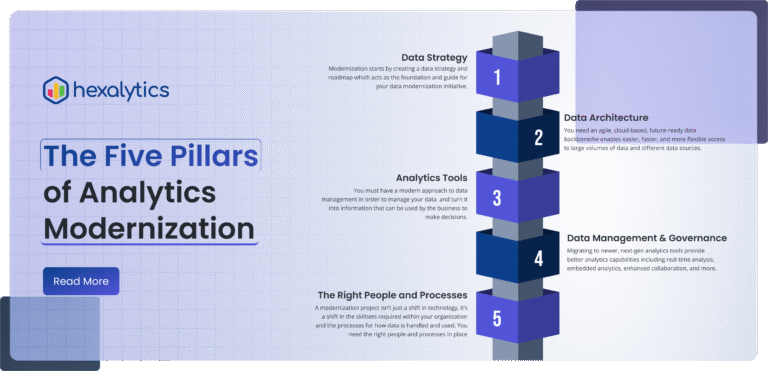
Data has become the most powerful asset for modern organizations, yet many still struggle to harness its full value. With data volumes growing exponentially and new sources emerging every day, traditional systems are no longer enough. Legacy architectures can’t deliver the speed, scale, or intelligence today’s leaders need to make confident, real-time decisions. To stay…