Real Time K12 Enrollment Management Application for District Leaders
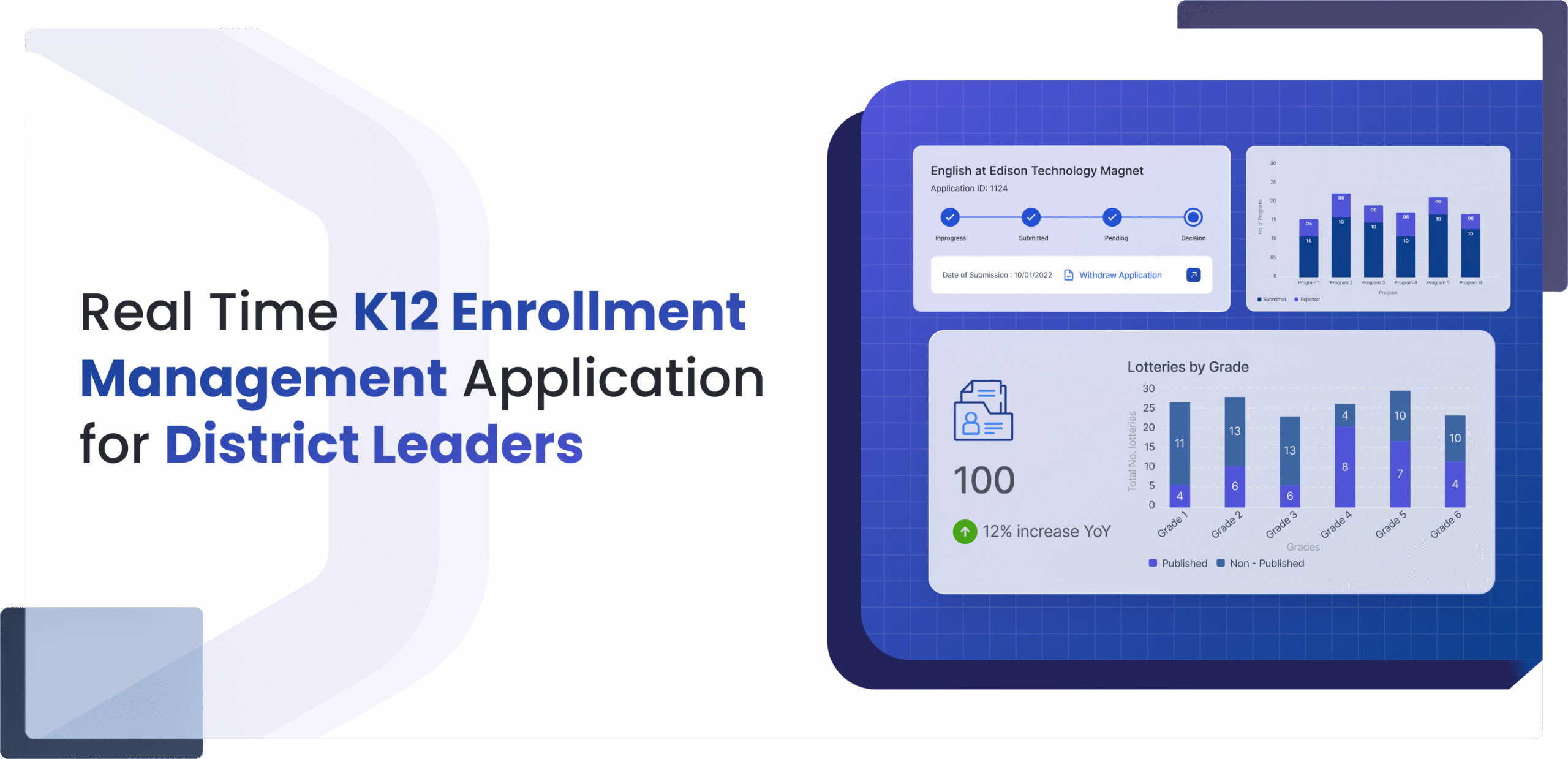

Enrollment across the United States is contracting. This is not a temporary fluctuation.
K12Dive Reporting confirms what many district leaders are already seeing in their own communities: declining birth rates, shifting migration patterns, and regional demographic change are reshaping enrollment trajectories across states and districts.
The scale of this shift is becoming clearer in state-level data as well. In Wisconsin, preliminary unaudited statewide counts show enrollment fell nearly 6 % in September 2025 to 2026, representing a loss of roughly 46,180 students year over year. One year-over-year loss of this size shows how quickly enrollment patterns are shifting.
Disconnected reports cannot support leaders during this level of volatility. Leaders need connected enrollment intelligence that speaks their language, anticipates change, and links every enrollment shift directly to staffing, budgeting, and program planning. Strategic Plan Dashboards keep planning aligned with real-time enrollment movement, so district goals adjust to shifting student patterns.
Modern K12 enrollment management software provides the early signals and connected insight leaders need to make informed decisions. These platforms unify fragmented data, eliminate reporting delays, and present information in the clear, intuitive format district executives expect.
Lower birth rates have reduced incoming cohorts for more than a decade. These reductions are visible in early grades today and will influence the P20 pipeline for years.
A modern SIS-integrated enrollment solution enables leaders to:
Modern K-12 enrollment and registration software highlights:
These insights allow leaders to plan with precision. These same demographic and program trends also influence statewide readiness, which the GPS Dashboard tracks across academics, well-being, civic engagement, and workforce outcomes.
Resource planning becomes clearer when paired with operational visibility tools like Asset Fusion 360, which shows device needs, facilities load, and maintenance demand tied to enrollment shifts.
A modern school district enrollment platform consolidates enrollment, mobility, demographics, staffing, school choice patterns, and funding implications into one view.
This gives leaders the ability to:
AI-powered enrollment forecasting for K12 helps leaders:
Modern K-12 enrollment management software is now a leadership system.
Hexalytics provides AI-powered enrollment intelligence and unified analytics designed specifically for K12 and P20 systems. Our platforms support real-time enrollment visibility, forecasting, strategic plan alignment, and districtwide decision-making. With more than 15 years of experience, we help education leaders turn complex data into clear insight
Ready to see your enrollment patterns in one connected view?
Schedule a 20-minute Enrollment Strategy Review with Hexalytics.
It gives leaders real time enrollment data so they can plan staffing, budgeting, and resources with accuracy.
It manages registration, student data, and family submissions in one place, making enrollment easier for schools and families.
It centralizes enrollment information and helps leaders understand school level and grade level trends quickly.
It predicts future enrollment using trends and demographics so districts can plan ahead with confidence.
Yes. Hexalytics connects with lottery systems to track demand, seat availability, and family preferences.
It reduces manual paperwork, speeds up registration, and keeps student information organized.
It ensures that enrollment data stays accurate and updated across all district systems without manual work.
Yes. Hexalytics integrates with your existing admissions and enrollment tools to create a unified enrollment view.
It provides early warning signals, clear patterns, and forecasts that help leaders respond before issues grow.
Yes. Hexalytics connects K12, postsecondary, and workforce data to help leaders plan across the full student journey.
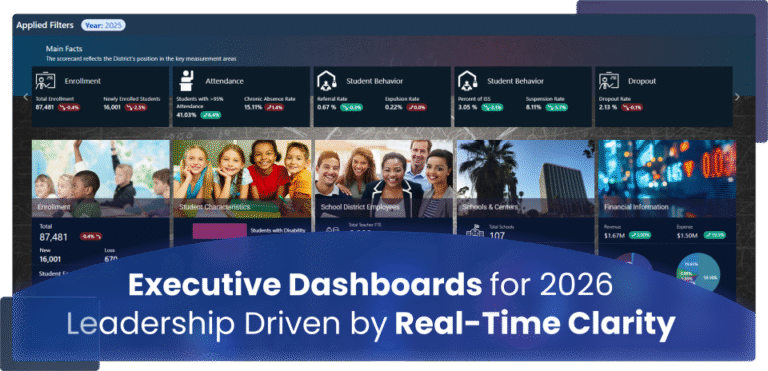
Real-time, AI-powered dashboards give K-12 and state leaders clarity to track shifts, predict risks, and make faster decisions. Explore how unified intelligence strengthens strategy, alignment, and 2026 readiness.
In every school district, there are important questions being asked every day: Are our students learning what they need to thrive? Are we supporting every child, in every school? Are our efforts actually making a difference? The truth is—everyone’s trying their best. But it’s hard to stay on the same page when different people are…
Digital learning has never been more dependent on reliable technology. According to CoSN’s annual EdTech Leadership Survey and Gartner’s ITSM Market Insights, districts now manage more devices, apps, and cloud systems than ever yet many still face slow support, rising downtime, and disconnected service workflows across their IT service management for school districts. Modern IT…
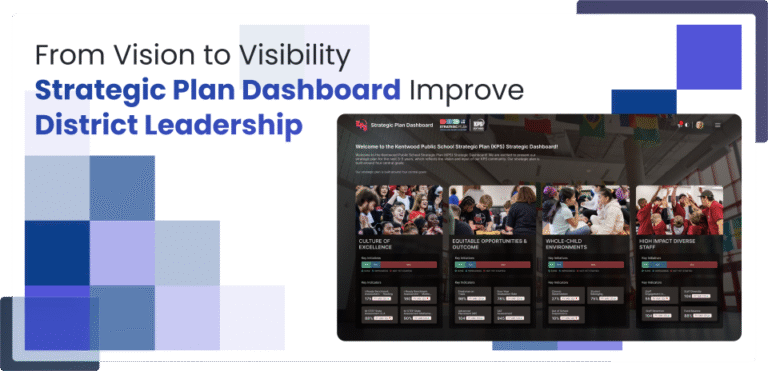
Gain a unified view of your district with connected systems, clearer insights, stronger governance, and smarter decisions as Hexalytics transforms scattered data into one strategic, efficient, and accountable K-12 portfolio.
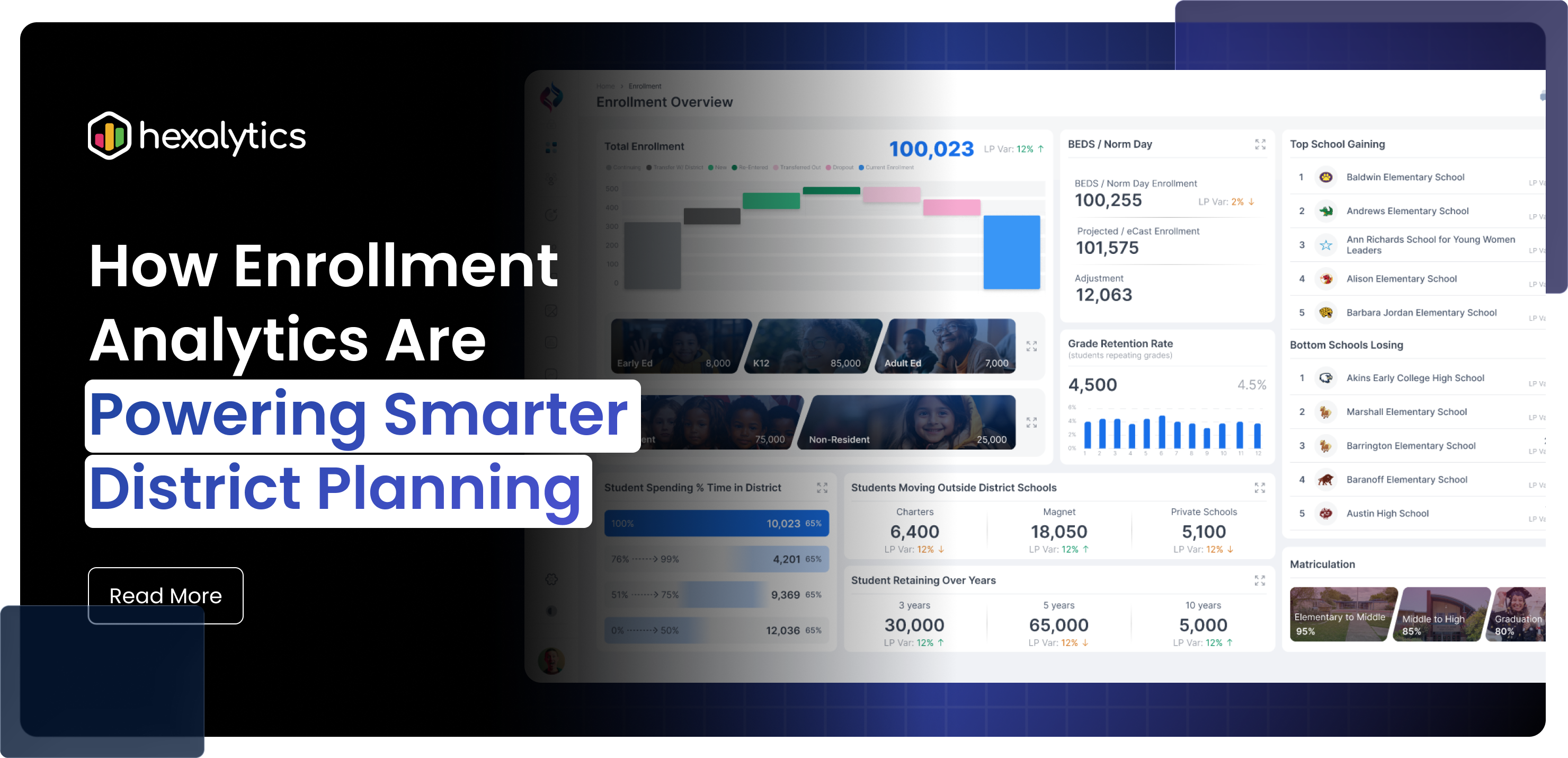
Across U.S. school districts, enrollment data is shaping some of the most important decisions for 2025 and beyond — from staffing and budgeting to equity and long-term planning. Yet in many districts, this data remains scattered across spreadsheets and disconnected systems, making it hard to see the full picture. This blog explores how Enrollment Analytics…
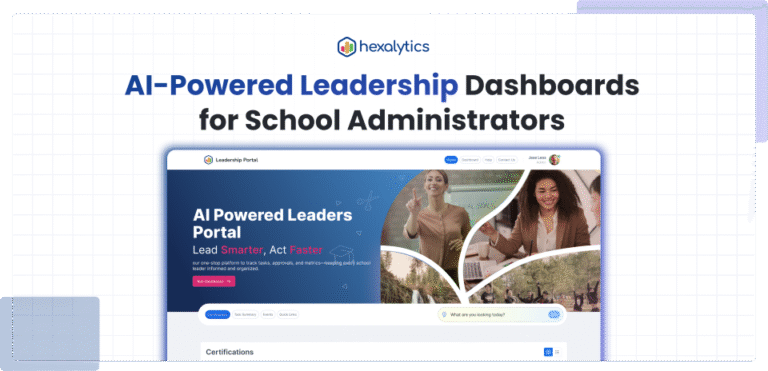
Leading with Clarity in the Age of Complexity Across the U.S., K-12 school administrators are navigating an era of expanding responsibility but diminishing clarity. From certification approvals and compliance reporting to instructional oversight and staff coordination, superintendents and principals are increasingly challenged by fragmented education data systems and disconnected workflows. A 2024 RAND Corporation study…