Supporting the Whole Child Analytics That Go Beyond Grades
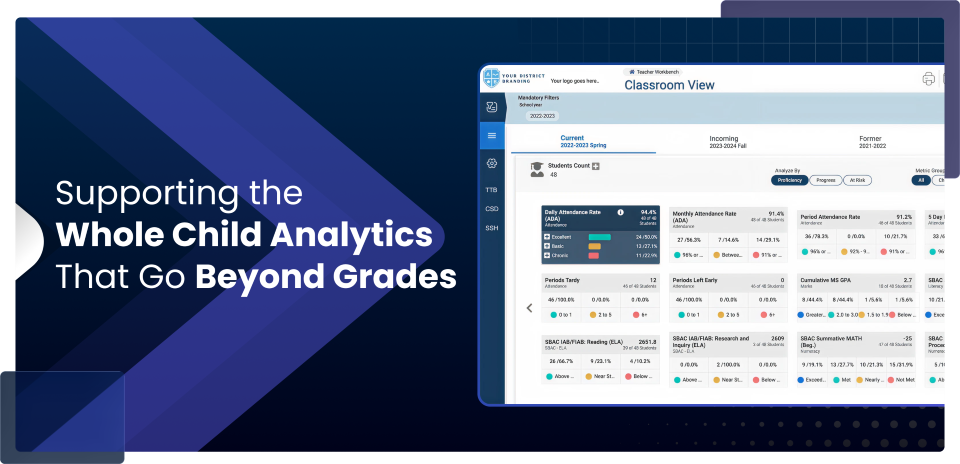

Recent reporting from K–12 Dive and EdWeek reveals a clear truth across school systems. Chronic absenteeism is still elevated. Student mental health needs continue to rise. Districts now collect more social and emotional learning data than ever before, yet leaders still struggle to convert these signals into timely, coordinated action.
Federal policy reflects this urgency. In late 2025, the U.S. Department of Education awarded more than $200 million in school-based mental health grants. Districts are expanding counseling teams, launching SEL initiatives, and rethinking support models. Resources are shifting, expectations are rising, and the pressure to demonstrate real impact is intensifying.
Even as investments grow, most districts still view attendance, SEL, behavior, health, and equity data in siloed systems. Leaders see fragments of the picture, but rarely the full story.
The challenge is not data scarcity. The challenge is fragmentation.
For decades, student success was defined by test scores, grades, and growth charts. These academic metrics remain essential, but leaders now recognize a fundamental limitation. Academic data reveals what happened. It rarely reveals why it happened.
Student outcomes are shaped by an interconnected set of experiences and conditions:
Attendance patterns
Social and emotional readiness
Health barriers
Behavioral experiences
Family and economic stability
When these indicators live in isolation, leaders see symptoms rather than root causes.
A spike in absenteeism may reflect anxiety, caregiving responsibilities, or housing instability. Behavior referrals may be early signs of disengagement or lack of connection.Declining engagement often emerges weeks before academic decline.
Whole Child dashboards do not replace academic performance. They unlock the context leaders need to intervene earlier, plan strategically, and support students more effectively.
Frameworks such as ASCD’s Whole Child model and the federal WSCC framework emphasize that students must be healthy, safe, engaged, supported, and challenged in order to learn. This philosophy is now shaping policy, funding, and accountability expectations.
Districts are building stronger student support teams. Boards want clear evidence of impact. Superintendents are expected to identify emerging risks early, not report on issues months after they occur.
This shift demands clearer, more connected insight than traditional reporting can provide.
Whole child analytics close this gap by transforming fragmented signals into decision-ready insight. A modern Whole Child data analytics platform gives district leaders a unified way to understand how academic, SEL, behavior, health, and equity indicators intersect.
A true K–12 student success dashboard brings every dimension of the student experience into one connected view that supports faster, more confident decisions. Many dashboards are marketed as “360° views,” yet very few provide true Whole Child intelligence. A real Whole Child dashboard integrates multiple domains into a clear, connected, leadership-level view that reflects the complexity of student experience.
Academic Performance : Anchors the student story with grades, assessment trends, and growth indicators.
Attendance : Identifies emerging risk through daily patterns and chronic absenteeism indicators.
Social Emotional Learning : Surveys surface belonging, resilience, stress, and engagement when paired with context.
Behavior and Discipline : PBIS indicators and referral patterns reflect student experience and climate
Health Indicators : Screenings, nursing visits, counseling referrals indicators reveal readiness to learn.
Poverty and Access Indicators : Free and reduced lunch status, homelessness, language access, and special education data reveal inequities that influence every outcome.
Viewed together, these signals produce a holistic, timely picture that isolated reports can never deliver. A Whole Child 360 dashboard for schools replaces siloed reporting with an integrated view that helps leaders act earlier and with greater clarity.
Whole Child dashboards are not built for analysts. Effective leadership depends on strong K–12 data integration and analytics capabilities that unify information from systems that traditionally do not communicate.
They are built for the people responsible for strategy, governance, and student success. For superintendents, cabinet members, and boards, integrated dashboards enable three critical outcomes.
Early Visibility : Leaders can detect emerging risk before it becomes an academic problem. Patterns become clear. Blind spots disappear.
Strategic Alignment : Attendance, SEL, behavior and equity initiatives are viewed through one shared lens. This drives consistent decision-making across departments.
Resource Stewardship : Leaders can demonstrate whether investments in counseling, SEL, mental health, or student support are producing measurable improvement.
This is the difference between monitoring programs and governing systems of support.
Districts are entering a defining period. Federal relief funding is tapering. Mental health investments are expanding. Boards are demanding evidence of effectiveness.
Disconnected reports cannot provide these answers.
Whole Child dashboards represent a shift from reactive leadership to proactive governance. From fragmented views to connected insight. From academic-only metrics to student-centered decision-making.
Leadership requires clarity. Clarity requires a connected view of every student.
Hexalytics helps school districts transform complex, multidimensional data into leadership-ready intelligence. Our Whole Child dashboards integrate academic, attendance, SEL, behavior, health, and equity data into a unified view designed for superintendents, boards, and district leadership teams.
By moving beyond grades, Hexalytics enables earlier insight, stronger alignment, and smarter decisions that improve outcomes for every student.
A Whole Child data dashboard provides a connected view of academic, SEL, attendance, behavior, health, and equity indicators. It helps district leaders understand why student outcomes are changing, not just what changed.
A K–12 student success dashboard brings multiple data sources together so leaders can see early warning signs, monitor student experience, and make faster, more informed decisions that improve outcomes.
A Whole Child 360 dashboard gives districts a unified picture that replaces fragmented reports. It highlights engagement patterns, barriers to learning, and emerging risks that traditional reports often miss.
A strong K–12 data integration and analytics solution should combine academics, SEL, attendance, behavior, and equity data. It should help leaders act quickly by providing clear, connected insights across schools.
A Whole Child dashboard highlights early patterns in engagement, behavior, SEL, attendance, and academic performance, helping leaders spot emerging needs before they escalate.
A strong Whole Child data analytics platform brings together academics, SEL surveys, attendance, behavior, health records, equity data, and student services information to create a connected picture of every learner.
K–12 data integration allows districts to combine information from systems that do not normally communicate. This unified view supports stronger decision-making, earlier intervention, and more consistent leadership action.
New Data Era for Supporting the Whole Child
Why Grades Alone Are No Longer Enough
The Whole Child Shift Is Now Operational
What a True Whole Child Dashboard Must Include
From Data Collection to Leadership Action
Conclusion
FAQs
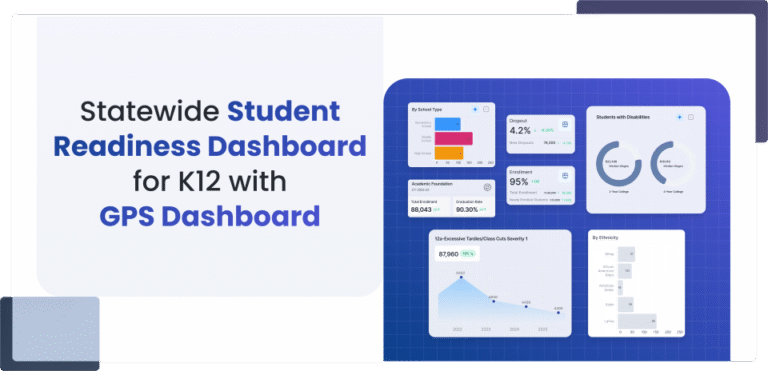
A statewide GPS Dashboard unifies readiness data across academics, well-being, civic involvement, and workforce outcomes, helping leaders identify gaps early and strengthen student pathways from school to career.
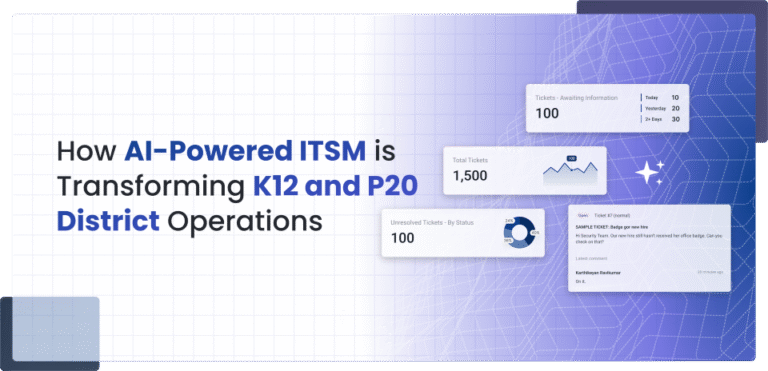
Digital learning has never been more dependent on reliable technology. According to CoSN’s annual EdTech Leadership Survey and Gartner’s ITSM Market Insights, districts now manage more devices, apps, and cloud systems than ever yet many still face slow support, rising downtime, and disconnected service workflows across their IT service management for school districts. Modern IT…
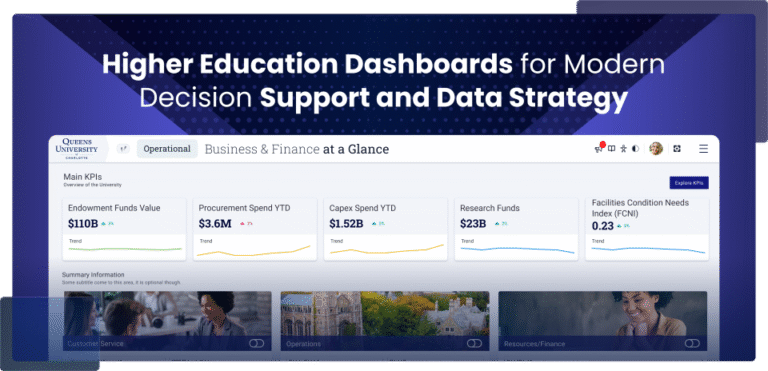
Unified data platforms for higher education decision making deliver real-time enrollment analytics, financial clarity, and student success visibility, helping universities strengthen forecasting and institutional strategy.
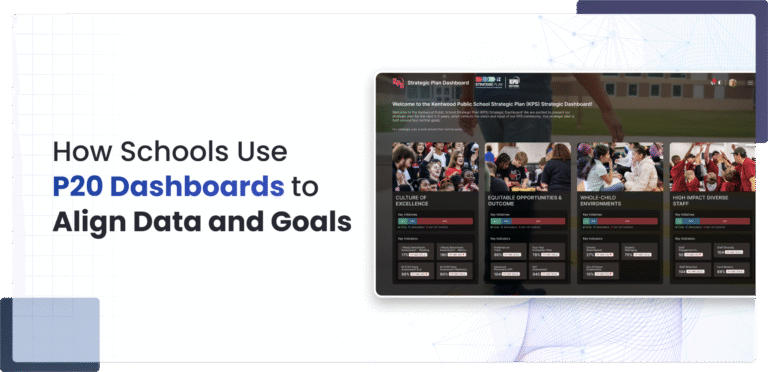
Across the U.S., education leaders are rethinking how data connects learning from preschool through postsecondary education. The P-20 model, which spans early learning, K-12, higher education, and workforce readiness, aims to make every learner’s journey coherent, measurable, and supported by shared insight. Yet most education systems still operate in silos, limiting visibility into how early…
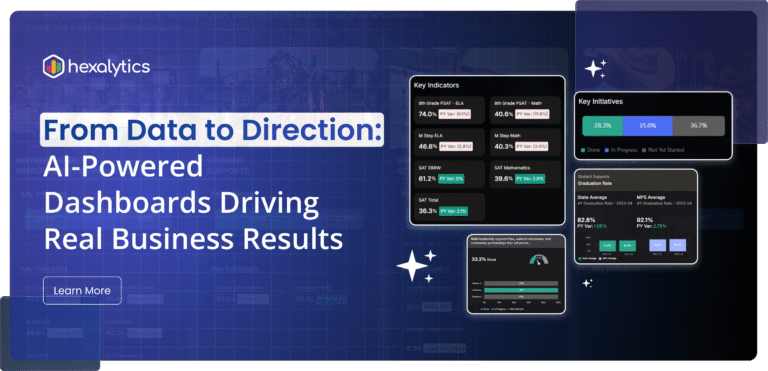
Most dashboards stop at reporting.They tell you what happened—but not what to do next. In a market where speed and precision matter more than ever, that’s not enough.Businesses today need systems that do more than display data. They need intelligence—built in.At Hexalytics, we help organizations transform the way they use data. Our AI-powered dashboards don’t…
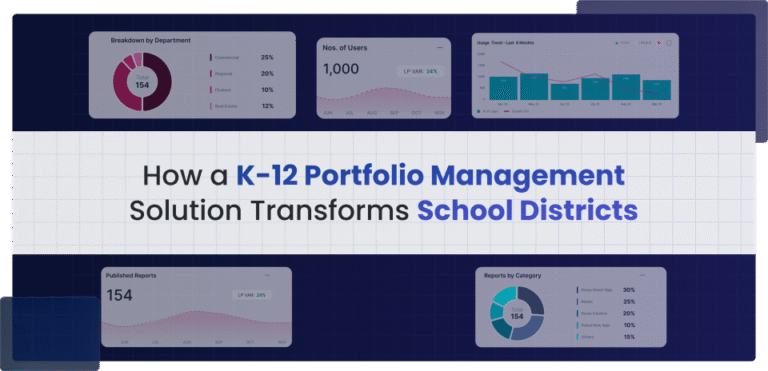
Gain a unified view of your district with connected systems, clearer insights, stronger governance, and smarter decisions as Hexalytics transforms scattered data into one strategic, efficient, and accountable K-12 portfolio.